-
Being caught speeding does not automatically mean you will be offered a speed awareness course. While many drivers expect the option to avoid penalty points through a course, eligibility depends on several factors, including the speed recorded, previous driving history, location of the offence, and police force policies.
In some cases, the course may not be available even for relatively minor offences. Understanding the reasons behind the decision can help you determine why you were not offered a course and what steps you may need to take next.
Why Was I Not Offered a Speed Awareness Course?
1
Your Speed Was Too High

A speed awareness course is usually offered only when the speeding offence falls within a lower-level range. If your recorded speed was much higher than the legal limit, the police may decide that education is not enough. In that situation, you may receive penalty points, a fine, or even a court summons instead. This often happens when the speed suggests a serious safety risk to other road users, pedestrians, or passengers.
Common Signs:
- ✦ Your recorded speed was far above the limit
- ✦ The notice mentions points or prosecution
- ✦ No course option is shown
What You Can Do?:
- ◆ Read the notice carefully
- ◆ Check the recorded speed
- ◆ Seek legal advice if needed
2
You Recently Completed a Speed Awareness Course

Drivers are usually not offered another speed awareness course if they have completed one for a similar offence within the last three years. This rule is used to stop drivers from repeatedly avoiding penalty points through courses. Even if your latest speeding offence was minor, your recent course history may make you ineligible. The police system can check whether you have attended or booked a course before deciding what options to offer.
Common Signs:
- ✦ You attended a course recently
- ✦ You avoided points before
- ✦ The new notice offers only a fine
What You Can Do?:
- ◆ Check your previous course date
- ◆ Review your notice
- ◆ Accept the correct penalty option
3
Your Speed Was Outside the Course Threshold
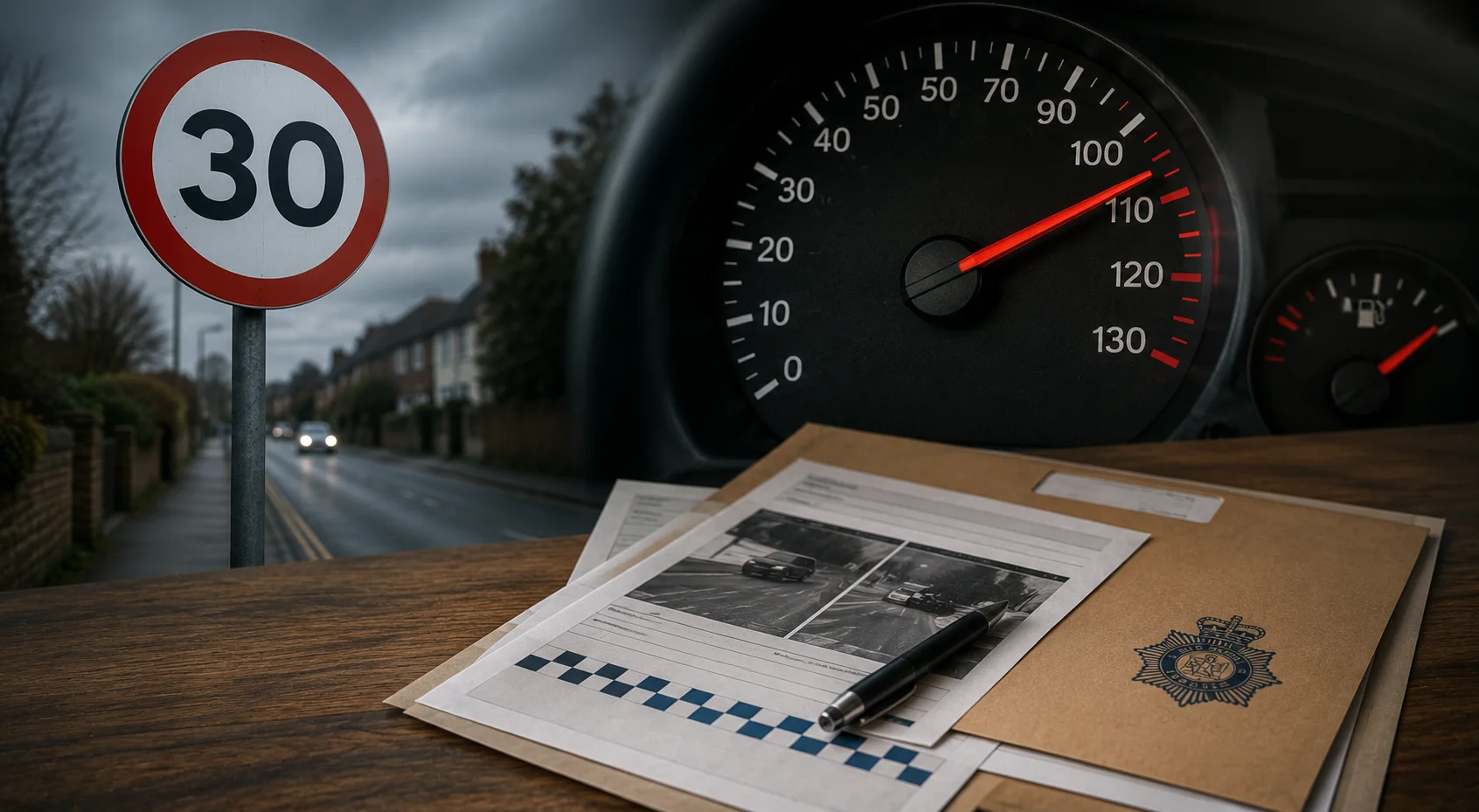
Speed awareness courses are normally offered only within specific speed thresholds. These thresholds vary depending on the speed limit of the road and police guidance. For example, being slightly over the limit may qualify, but exceeding the upper threshold may remove the course option. This means two drivers caught speeding on different roads may receive different outcomes, even if both were only a few miles per hour apart.
Common Signs:
- ✦ Your speed was above the allowed range
- ✦ The offence was treated as more serious
- ✦ No course invitation was included
What You Can Do?:
- ◆ Compare the speed and road limit
- ◆ Contact the ticket office
- ◆ Respond before the deadline
4
You Missed the Response Deadline

A speed awareness course may only be available if you respond to the police notice within the required time. If you delay, ignore the letter, or return the driver information late, the course option may be withdrawn. Police deadlines are important because the case must be processed within legal time limits. Missing the deadline can make the situation worse and may lead to a fixed penalty, court action, or another offence for failing to identify the driver.
Common Signs:
- ✦ You replied late
- ✦ You received a reminder letter
- ✦ The course option disappeared
What You Can Do?:
- ◆ Reply as quickly as possible
- ◆ Keep proof of your response
- ◆ Contact the police office immediately
5
The Offence Happened in Scotland

Speed awareness courses are not offered in the same way across every part of the UK. If your speeding offence happened in Scotland, you may not receive a course option, even if a similar offence in England or Wales might have qualified. Drivers sometimes become confused when they live in one part of the UK but commit the offence elsewhere. The rules usually depend on where the offence took place, not where the driver lives.
Common Signs:
- ✦ The offence happened in Scotland
- ✦ No course provider is mentioned
- ✦ The notice only lists penalty options
What You Can Do?:
- ◆ Check the offence location
- ◆ Follow the local police instructions
- ◆ Do not ignore the notice
6
The Police Force Chose Not to Offer One

A speed awareness course is never guaranteed. Even if your speed appears to fall within the usual range, the police force handling the offence has discretion. They may consider road conditions, previous driving history, local policy, or other circumstances before deciding. Some drivers assume they can request a course, but it must be officially offered. If the letter does not include a course option, you usually cannot simply book one yourself.
Common Signs:
- ✦ You expected a course but did not get one
- ✦ Only a fine and points are offered
- ✦ The police letter gives no course code
What You Can Do?:
- ◆ Contact the issuing force
- ◆ Ask for clarification politely
- ◆ Follow the available legal option
7
The Offence Was Considered Too Serious
Some speeding cases involve extra risk factors that make a course unsuitable. This may include speeding near schools, roadworks, pedestrian areas, bad weather, heavy traffic, or hazardous road conditions. Even if the speed itself does not seem extreme, the surrounding circumstances may make the offence more serious. Police may decide that penalty points or court action better reflects the level of risk involved.
Common Signs:
✦ The offence happened in a risky area
✦ Other driving concerns were noted
✦ Court action is mentioned
What You Can Do?:
- ◆ Review the full circumstances
- ◆ Keep all letters and evidence
- ◆ Get legal help if prosecution is possible
8
You Already Have Another Course Booked
If you already have a speed awareness course booked for another offence, you may not be offered a second one. The system is designed to treat the course as an educational alternative, not as something drivers can repeatedly use for multiple offences. A second speeding notice may therefore lead to points and a fine, even if you have not yet attended the first course. This can happen when offences occur close together.
Common Signs:
- ✦ You already accepted a course offer
- ✦ Another speeding notice arrived
- ✦ The second letter gives no course option
What You Can Do?:
- ◆ Attend the course already booked
- ◆ Check both notices separately
- ◆ Avoid missing any deadlines
9
The Case Was Not a Simple Speeding Offence
Not every speeding-related case is treated as a standard speeding offence. If the matter includes careless driving, failing to name the driver, using a vehicle without correct documents, or another road traffic issue, the police may follow a different process. In these cases, a speed awareness course may not be considered suitable. The focus may shift from education to enforcement because the offence involves more than simply exceeding the speed limit.
Common Signs:
- ✦ Another offence is listed
- ✦ You did not identify the driver on time
- ✦ The case is moving toward court
What You Can Do?:
- ◆ Read the offence wording carefully
- ◆ Respond accurately
- ◆ Ask for legal advice if unsure
10
Your Details or Licence Information Caused a Problem
Sometimes a speed awareness course is not offered because of administrative or licence-related issues. This may happen if your address is outdated, your driving licence details do not match, the police could not confirm information, or correspondence was delayed. If important letters are missed, the opportunity to accept a course may pass. Keeping DVLA records updated is essential because official notices are usually sent to the registered address.
Common Signs:
- ✦ You did not receive the first letter
- ✦ Your address was outdated
- ✦ The booking system does not recognise details
What You Can Do?:
- ◆ Check your DVLA records
- ◆ Contact the ticket office quickly
- ◆ Update your licence and vehicle details
What Happens If You Are Not Offered a Speed Awareness Course?
If you are not offered a speed awareness course, the most common outcome is receiving a Fixed Penalty Notice (FPN), which usually includes a fine and penalty points on your driving licence. In more serious cases, particularly where the speed was significantly above the limit or there were aggravating circumstances, the matter may be referred to court.
The exact outcome will depend on the nature of the offence and the decision made by the police force handling the case.
Possible Outcomes
- A fixed fine and penalty points
- A court summons for more serious offences
- Higher fines if the case goes to court
- Additional driving penalties in severe cases
- Increased insurance premiums after conviction
What Should You Do Next?
- Read all correspondence carefully and note any deadlines
- Respond promptly to any requests for information
- Pay fines or accept penalties within the required timeframe
- Seek legal advice if the offence is being referred to court
- Keep copies of all documents related to the case
Although missing out on a speed awareness course can be disappointing, dealing with the matter promptly can help prevent further penalties and ensure the process is resolved as smoothly as possible.
Frequently Asked Questions
Can I request a speed awareness course if it was not offered?
No. A speed awareness course must be offered by the police. You generally cannot choose or book one yourself without an official invitation.
How many times can I take a speed awareness course?
Most drivers can only attend one speed awareness course for a similar offence within a three-year period.
Will I get penalty points if I am not offered a course?
In many cases, yes. Drivers who are not eligible for a course are often given a fixed penalty that includes points and a fine.
Does every police force offer speed awareness courses?
Most police forces participate in the scheme, but eligibility rules and enforcement decisions can vary depending on the location and circumstances.
Can a speeding offence go straight to court?
Yes. If the speed was significantly above the limit or the offence involved aggravating factors, the case may be referred directly to court.
Does attending a speed awareness course remove the offence from my record?
No. The offence is still recorded, but successfully completing the course usually means you avoid receiving penalty points for that offence.
How long do I have to respond to a speeding notice?
The deadline is usually stated on the notice. It is important to respond promptly, as missing the deadline can affect your options and lead to further penalties.