
Is the Cutest Mammal on Earth Disappearing Right Under Our Noses?
If nature held a popularity contest, the red panda would win hands down for sheer charm. With their rust-coloured coats, fluffy ringed tails, and expressive eyes, these tree-dwelling mammals seem straight out of a fantasy book.
But beneath the surface of their enchanting appearance lies a troubling reality, one of quiet disappearance. Despite their internet fame and global fan base, red pandas are inching dangerously close to extinction.
So, why are red pandas endangered? The answer, while not as cute as the creature itself, reveals a complicated web of ecological threats, human pressures, and conservation challenges that many people still don’t know exist.
This blog explores those reasons in detail and explains why it’s time we paid serious attention to the survival of this small but vital species.
What Is Causing the Red Panda Population to Decline?
The red panda, known scientifically as Ailurus fulgens, is currently listed as Endangered on the IUCN Red List, with fewer than 10,000 mature individuals believed to be living in the wild. Some experts argue the true number may be even lower, as these elusive animals are difficult to spot in their dense forest habitats.
The decline is not the result of a single threat. Rather, it is a combination of habitat loss, poaching, climate change, and human interference, a cocktail of pressures that have converged over the past few decades to threaten their existence.
Red pandas are found mainly in the Eastern Himalayas and the mountains of southwestern China, areas that have undergone significant environmental changes due to human activity.
What’s particularly tragic is that these animals are not just symbols of biodiversity, they also play a critical role in maintaining the health of their forest ecosystems.
How Is Habitat Loss Putting Red Pandas at Risk?
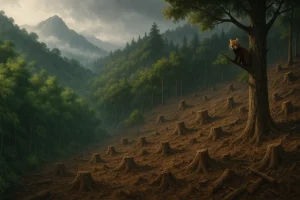
One of the most significant and immediate threats to red pandas is habitat loss. Their natural habitat, temperate forests rich in bamboo—has been shrinking due to expanding agriculture, infrastructure development, and logging.
In many parts of Nepal, India, and Bhutan, forests are cleared for crop cultivation, livestock grazing, and the construction of roads and settlements. This deforestation not only removes the red panda’s primary food source bamboo, but also fragments the forests into isolated patches.
When habitats are fragmented, red pandas are forced to travel further for food and mates, increasing their exposure to predators and human-related dangers such as vehicles and domestic dogs.
In addition, bamboo has a peculiar growth cycle. It flowers only once every few decades, after which the plant dies. Without large, continuous bamboo forests, red pandas cannot survive these cycles, as they are unable to easily migrate to new feeding grounds.
Is Poaching Still a Problem for Red Pandas?
Despite being a protected species under CITES Appendix I, which bans international trade, red pandas are still hunted illegally. Poaching remains a persistent issue in areas where law enforcement is under-resourced or poorly managed.
Red pandas are targeted for several reasons. Their soft reddish-brown fur is used to make decorative hats and clothing in certain local traditions. In recent years, the illegal pet trade has also become a growing concern, especially in parts of China and Southeast Asia where exotic pets are seen as status symbols.
Even when laws are in place, enforcement is difficult in the remote mountainous areas where red pandas live. There is also a lack of public awareness among rural communities about the animal’s endangered status, which further fuels hunting and trapping.
How Does Climate Change Affect Red Panda Survival?
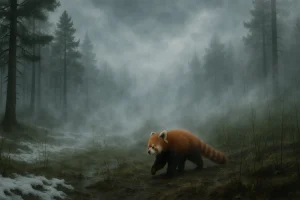
While habitat loss and poaching are immediate threats, climate change looms as a longer-term danger. Red pandas are highly adapted to cool, temperate climates typically found at altitudes between 2,200 and 4,800 metres. As global temperatures rise, the delicate balance of these mountain ecosystems is beginning to shift.
One of the most significant impacts of climate change on red pandas is its effect on bamboo, which makes up the majority of their diet.
Changes in temperature and rainfall patterns can lead to the decline of bamboo forests, forcing red pandas to move to higher altitudes in search of food. However, these higher zones are limited in space and may not be suitable in the long term.
Additionally, changing climates can alter breeding cycles and increase the spread of diseases and parasites in previously safe zones. These changes, although subtle and gradual, can have a profound effect on the already limited red panda population.
Are Conservation Efforts Making a Difference?
Despite the grim statistics, there is hope. Conservation efforts across the red panda’s range are showing signs of progress. Organisations like the Red Panda Network are actively working in countries like Nepal to implement community-based conservation models.
These programmes involve training local people as forest guardians who monitor red panda habitats and report illegal activities.
Zoos and breeding programmes also play a role in maintaining genetic diversity and educating the public. For instance, captive breeding initiatives in Europe and North America have helped raise awareness and funding for conservation work in the wild.
Furthermore, several governments have established protected areas and wildlife corridors that allow red pandas to move safely between fragmented forest patches. These efforts, when combined with education and strict anti-poaching laws, create a multi-pronged strategy that gives the species a fighting chance.
How Do Human Activities Influence Red Panda Endangerment?
While large-scale habitat loss often takes the spotlight, everyday human activities also have a significant impact on red pandas.
Unregulated tourism in Himalayan regions can disturb red panda habitats, especially when trails are built too close to known nesting sites. Increased noise and human presence may drive red pandas to flee or abandon breeding areas.
Another critical issue is the presence of free-roaming domestic dogs in forested areas. These dogs often accompany herders or villagers and can carry diseases such as canine distemper, which is deadly to red pandas.
Moreover, livestock grazing depletes forest undergrowth and disrupts bamboo growth, while **fires, both accidental and intentional**are a constant threat during the dry season. These cumulative pressures, while sometimes overlooked, can be just as destructive as poaching or deforestation.
What Steps Can Be Taken to Protect Red Pandas?
Saving red pandas requires cooperation at local, national, and international levels. While governments and conservation bodies must take the lead in creating policy and infrastructure, individuals can also play a role.
Some of the most effective strategies include:
- Supporting and donating to credible conservation organisations
- Educating local communities about the ecological importance of red pandas
- Promoting eco-tourism that benefits both wildlife and local economies
- Participating in reforestation projects
- Advocating for stronger wildlife protection laws and their enforcement
Public support and awareness are crucial. The more people understand the red panda’s plight, the more pressure there will be on decision-makers to act.
Can We Reverse the Threats Before It’s Too Late?

Time is running out, but the fight is not yet lost. The red panda may not roar like a lion or stampede like an elephant, but its quiet presence is just as important to the ecological health of Asia’s mountain forests.
Conservation successes in Nepal, growing international collaboration, and increased public interest show that positive change is possible. However, these efforts must be scaled up and sustained.
Saving red pandas is not just about preserving a single species, it’s about protecting a delicate web of life that benefits all creatures, including humans.
Key Threats and Their Impact on Red Pandas
| Threat | Description | Impact on Red Pandas |
| Habitat destruction | Logging, agriculture, roads | Loss of bamboo forests and nesting areas |
| Poaching | Fur trade, illegal pets | Population decline and trauma to breeding groups |
| Climate change | Rising temperatures, rainfall shifts | Bamboo loss, forced migration to less suitable habitats |
| Human disturbances | Dogs, tourism, fires | Increased stress, disease, and nesting abandonment |
Frequently Asked Questions
What do red pandas eat and how does it affect their survival?
Red pandas primarily eat bamboo, which is low in nutrition. They need to consume large quantities daily, and if bamboo forests are degraded or destroyed, they cannot find enough food to survive.
How closely related are red pandas to other panda species?
Despite the name, red pandas are not closely related to giant pandas. They belong to a separate family, Ailuridae, and are more genetically similar to raccoons than bears.
Where can red pandas be found in the wild?
Red pandas live in the temperate forests of the Eastern Himalayas, including Nepal, Bhutan, India, Myanmar, and China. These forests are typically found at high altitudes with abundant bamboo.
How many red pandas exist today?
It is estimated that fewer than 10,000 mature red pandas remain in the wild, although the exact number is uncertain due to their secretive nature and the inaccessibility of their habitats.
What conservation actions are currently helping red pandas?
Efforts include habitat protection, anti-poaching patrols, community involvement, forest restoration, and captive breeding programmes. NGOs and governments are working together to improve conservation infrastructure.
Why is habitat fragmentation such a big issue for red pandas?
Fragmentation isolates red panda populations, reducing their ability to breed and find food. It also forces them into riskier environments, increasing their exposure to predators and human threats.
Can red pandas be kept as pets?
No. Keeping red pandas as pets is illegal in most countries due to their endangered status and specialised care requirements. It also contributes to the black-market trade in wildlife.