
Lower teeth can sometimes hurt when you have a cold because illness can increase facial and jaw discomfort through congestion, nerve-related referred pain, jaw clenching, mouth breathing, dry mouth and increased tooth sensitivity.
However, sinus pressure usually affects the upper back teeth rather than the lower teeth because the roots of the upper premolars and molars sit much closer to the maxillary sinuses. Your lower teeth are not directly beneath these sinuses.
Therefore, pain specifically affecting the bottom teeth should not automatically be blamed on sinus pressure.
If one lower tooth is particularly painful, the discomfort continues after your cold improves, or you develop swelling, pain when biting or persistent temperature sensitivity, an underlying dental problem may need to be ruled out.
Why Are Upper Teeth More Likely To Hurt From Sinus Pressure?
The maxillary sinuses are air-filled spaces located behind the cheeks and above the upper back teeth.
During a cold, the lining of these sinuses can become inflamed and swollen. Mucus may also build up as drainage becomes less effective.
Because the roots of some upper premolars and molars can sit very close to the floor of the maxillary sinus, increased inflammation and pressure in this area may feel similar to a toothache.
This is why sinus-related dental discomfort more commonly affects several upper back teeth rather than the lower jaw.
Typical features may include:
- A Dull Pressure-Like Ache Across Several Upper Teeth
- Facial Fullness Or Pressure Around The Cheeks
- Nasal Congestion
- Discomfort That Changes As Congestion Improves Or Worsens
- Increased Pressure When Bending Forward
- Headache Or Facial Tenderness
Lower-tooth pain requires a slightly different explanation because the lower jaw does not have the same direct relationship with the maxillary sinuses.
If Lower Teeth Are Not Near The Sinuses, Why Can They Still Hurt?
Several effects of having a cold can make the lower teeth or jaw feel uncomfortable even though the teeth themselves are not beside the sinuses.
Referred Pain Through Facial Nerves
The face, teeth, jaw, and sinuses are supplied by branches of the trigeminal nerve.
Sometimes the brain does not identify the exact source of discomfort perfectly. Pain originating from one facial structure may therefore be perceived in a nearby area.
This is known as referred pain.
It may help explain why some people experience unusual jaw or dental sensations during significant facial congestion. However, referred pain should not automatically be assumed to be the cause of persistent lower-tooth pain.
Jaw Clenching And Teeth Grinding
Being ill can affect sleep, increase physical discomfort and cause people to tense their facial and jaw muscles.
Some people also clench or grind their teeth during sleep without realising it.
Clenching places repeated pressure on both the upper and lower teeth and may produce:
- Sore Lower Molars
- Generalised Tooth Tenderness
- Jaw Tightness
- Aching Facial Muscles
- Morning Headaches
- Discomfort When Chewing
- Pain That Is Worse Shortly After Waking
If several lower teeth feel tender rather than one tooth being sharply painful, jaw clenching may be worth considering.
Dry Mouth And Mouth Breathing
A blocked nose often causes people to breathe through their mouth, particularly during sleep.
This can reduce moisture in the mouth and leave the teeth, gums and oral tissues feeling uncomfortable.
Saliva normally helps lubricate the mouth, neutralise acids and protect the teeth. Persistent dryness can therefore make existing sensitivity more noticeable.
Drinking water regularly and maintaining normal oral hygiene can help reduce dryness while you recover.
Tooth Sensitivity
Cold air, hot drinks, cold drinks and changes in eating habits during illness can expose existing tooth sensitivity.
Sensitive teeth may produce a short, sharp sensation when exposed to temperature changes.
Sensitivity can be associated with:
- Worn Tooth Enamel
- Exposed Dentine
- Gum Recession
- Existing Cavities
- Cracked Teeth
- Previous Dental Treatment
If breathing cool air through your mouth consistently produces pain in one particular tooth, the tooth itself may require closer attention.
Existing Dental Problems Becoming More Noticeable
Having a cold does not necessarily cause a dental problem, but it can coincide with one.
When you are congested, tired, eating differently or clenching your jaw, an existing cavity, cracked tooth or gum problem may become much more noticeable.
This is particularly important when pain is focused on one lower tooth.
Why Do All My Bottom Teeth Hurt When I Am Ill?
Pain affecting many bottom teeth at the same time is different from pain affecting one individual tooth.
Widespread lower-tooth soreness may be associated with:
- Jaw Clenching Or Grinding
- Tension In The Jaw Muscles
- General Tooth Sensitivity
- Dry Mouth
- Changes In Eating And Drinking
- Referred Facial Discomfort
If the ache is relatively even across several teeth and improves as you recover, the cause may be temporary.
However, ongoing pain across the lower jaw should still be assessed if it does not settle, particularly if there is gum inflammation, swelling or difficulty opening the mouth.
What Does It Mean If Only One Lower Tooth Hurts?
Pain affecting one specific lower tooth is less typical of sinus-related discomfort.
A localised dental cause becomes more important to consider.
Possible causes include:
- Tooth Decay
- A Cracked Tooth
- An Inflamed Dental Pulp
- Gum Disease
- A Dental Abscess
- A Loose Or Damaged Filling
- An Impacted Or Partially Erupted Wisdom Tooth
Pay particular attention to pain that occurs when biting or chewing.
Lingering sensitivity after something hot or cold touches the tooth can also suggest that the problem is within the tooth rather than being caused by your cold.
Do not assume that a painful lower tooth is harmless simply because the symptoms started at the same time as a respiratory illness.
Could Lower Wisdom Teeth Be Causing The Pain?
Lower wisdom teeth are another possible source of pain at the back of the jaw.
A wisdom tooth that has only partly emerged can leave an area of gum around it where food and bacteria collect easily.
Inflammation around a partially erupted wisdom tooth may cause:
- Pain At The Back Of The Lower Jaw
- Tender Or Swollen Gum
- Discomfort When Chewing
- A Bad Taste In The Mouth
- Difficulty Cleaning Around The Tooth
- Pain Spreading Towards Nearby Teeth
- Difficulty Opening The Mouth In More Significant Cases
Someone who develops back-jaw pain during a cold may therefore mistakenly assume that congestion is responsible.
Persistent symptoms around a wisdom tooth should be examined by a dentist.
Why Does Tooth Pain Get Worse When I Bend Down, Cough Or Sneeze?
Changing head position can alter the sensation of pressure within inflamed sinus areas.
This is why facial pressure and sinus-associated upper-tooth discomfort may sometimes feel stronger when bending forward.
Coughing and sneezing can also temporarily increase pressure through the head and face, making existing discomfort more noticeable.
If bending forward consistently increases cheek pressure alongside pain across several upper teeth, sinus involvement becomes more plausible.
Isolated pain in one lower tooth that does not follow changes in congestion is more suggestive of a dental cause.
Why Do My Teeth Hurt More When Breathing Cold Air?
A blocked nose often forces you to breathe through your mouth.
Cool air passing directly over sensitive teeth can trigger discomfort, especially if dentine has become exposed.
You may notice a quick sharp sensation when:
- Breathing Cold Outdoor Air
- Drinking Cold Water
- Eating Cold Foods
- Rinsing Your Mouth With Cold Water
This differs from the broad, pressure-like discomfort more commonly associated with sinus congestion.
If the same individual tooth repeatedly reacts to cold temperatures, consider arranging a dental examination.
How Can I Tell Sinus Pressure From A Dental Problem?
The location and behaviour of your symptoms provide useful clues, although only an examination can confirm the exact cause.
Cold-Related Tooth Pain Vs Sinusitis Vs Dental Toothache
| Feature | Cold Or Congestion | Sinusitis | Dental Problem |
| Teeth Usually Affected | None Or Several Teeth | More Often Upper Back Teeth | Often One Specific Tooth |
| Nasal Congestion | Common | Common | Usually Absent |
| Facial Pressure | Possible | Common | Usually Absent |
| Pain When Bending Forward | Possible | Can Be More Noticeable | Usually Unrelated |
| Pain When Biting One Tooth | Less Typical | Less Typical | More Concerning |
| Persistent Hot Or Cold Sensitivity | Less Typical | Less Typical | More Suggestive |
| Swollen Gum | Unusual | Unusual | Possible |
| Bad Taste Or Dental Pus | No | No | Possible |
| Pain After Respiratory Symptoms Improve | Should Improve | May Continue Temporarily | Needs Dental Consideration |
These patterns are useful clues rather than a diagnosis.
A dentist may need to examine the tooth and, when appropriate, use dental X-rays or other tests to identify the source.
Why Do My Teeth Still Hurt After My Cold Has Gone?
Congestion and sinus inflammation do not always disappear immediately when your sore throat, cough or other cold symptoms start improving.
Some facial pressure may therefore remain for a short period.
The important question is whether the toothache is also getting better.
If the pain gradually decreases as your congestion clears, it may have been connected with the illness.
If the cold disappears but the toothache:
- Remains Unchanged
- Becomes More Severe
- Moves Towards One Particular Tooth
- Causes Pain When Biting
- Causes Persistent Temperature Sensitivity
- Is Accompanied By Gum Or Facial Swelling
A dental cause becomes more important to investigate.
Do not wait indefinitely for an obvious toothache to disappear simply because it began during a cold.
How Can I Relieve Lower Tooth Pain During A Cold?
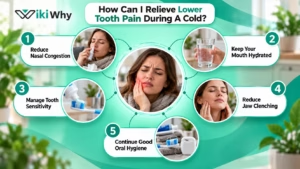
Treatment depends on what is actually causing the discomfort.
Reduce Nasal Congestion
Managing congestion may reduce facial pressure when sinus inflammation is contributing to the symptoms.
Helpful measures may include:
- Drinking Plenty Of Fluids
- Getting Adequate Rest
- Using Saline Nasal Products Appropriately
- Following Advice From A Pharmacist About Suitable Symptom Relief
Do not rely on congestion treatment to manage pain that is clearly coming from one tooth.
Keep Your Mouth Hydrated
Drink water regularly, particularly if nasal blockage is causing mouth breathing.
Sugar-free gum may help stimulate saliva for some people.
Avoid constantly sucking sugary sweets or lozenges because frequent sugar exposure can increase the risk of tooth decay.
Manage Tooth Sensitivity
A toothpaste designed for sensitive teeth may help if temporary sensitivity is contributing to the pain.
Avoid very hot or very cold foods for a short period if they consistently trigger discomfort.
Persistent sensitivity in one tooth should be assessed rather than repeatedly treated at home.
Reduce Jaw Clenching
Try to keep your jaw relaxed when you notice yourself tightening it. When resting, your teeth do not normally need to remain pressed together.
Avoid excessive chewing if your jaw muscles already feel sore. Recurrent grinding or clenching may require advice from a dentist.
Continue Good Oral Hygiene
Being unwell can make normal routines harder, but continue caring for your mouth.
You should generally:
- Brush Twice Daily With Fluoride Toothpaste
- Clean Between Your Teeth Regularly
- Drink Water Throughout The Day
- Avoid Excessive Sugary Snacks And Drinks
- Avoid Ignoring Gum Swelling Or Bleeding
Good oral hygiene will not cure sinus pressure, but it can help prevent unrelated dental problems from developing or worsening.
Do I Need Antibiotics For Sinus-Related Tooth Pain?
Usually not. Most common colds are caused by viruses, so antibiotics do not treat the underlying illness.
Acute sinusitis also frequently improves without antibiotics.
Antibiotics are not a routine treatment simply because you have coloured nasal mucus, facial pressure or tooth discomfort.
They also cannot repair:
- Tooth Decay
- A Cracked Tooth
- Damaged Fillings
- Tooth Grinding
- Ordinary Tooth Sensitivity
If a bacterial dental infection is diagnosed, a dentist will decide what treatment is required. Dental treatment may still be necessary because antibiotics alone do not remove the underlying cause of many tooth infections.
When Should I See A Dentist, Pharmacist, GP Or NHS 111?
The appropriate service depends on your symptoms.
Contact A Dentist If
Consider dental assessment if:
- Toothache Lasts More Than Two Days
- One Tooth Is Clearly More Painful Than The Others
- Pain Is Becoming Worse
- The Tooth Hurts When You Bite
- Hot Or Cold Sensitivity Persists
- The Gum Around The Tooth Is Swollen
- You Notice A Bad Taste In Your Mouth
- You Have Swelling Around Your Jaw Or Cheek
- Tooth Pain Continues After Your Cold Improves
Speak To A Pharmacist Or GP If
Medical advice may be more appropriate when your symptoms primarily involve your nose, sinuses or respiratory illness rather than an individual tooth.
Seek advice if symptoms are persistent, significantly worsening or you feel particularly unwell.
If you are unsure which service is appropriate, NHS 111 can provide guidance.
When Is Tooth Pain During A Cold An Emergency?

Most toothache associated with a cold is not an emergency.
However, severe swelling or spreading infection can become urgent.
Seek urgent medical help if swelling around your mouth, face or neck makes it difficult to:
- Breathe Normally
- Swallow
- Speak
Urgent assessment is also important if swelling spreads towards the eye or neck or you become severely unwell.
These symptoms should not be treated as ordinary cold-related tooth sensitivity.
Can You Prevent Tooth Pain When You Have A Cold?
You cannot completely prevent every episode of dental discomfort during an illness, but several habits may reduce the likelihood of problems.
Try to:
- Stay Well Hydrated
- Continue Brushing Twice Daily
- Clean Between Your Teeth
- Reduce Frequent Sugary Snacks
- Avoid Constant Jaw Clenching
- Manage Nasal Congestion Appropriately
- Avoid Extremely Hot Or Cold Foods If Your Teeth Are Sensitive
- Attend Regular Dental Check-Ups
- Have Persistent Dental Problems Treated Rather Than Waiting For Them To Worsen
Keeping existing dental problems under control makes it less likely that an illness will coincide with significant tooth pain.
Conclusion
Lower teeth can ache during a cold, but sinus pressure should not automatically be blamed.
Sinus-related toothache classically affects the upper back teeth because they are located much closer to the maxillary sinuses.
Lower-tooth discomfort during illness may instead be associated with referred facial pain, teeth grinding, jaw clenching, mouth breathing, dry mouth or existing dental sensitivity.
The pattern of pain matters.
A general ache affecting several teeth that improves alongside your cold is usually less concerning than severe, persistent pain focused on one tooth.
If a lower tooth continues hurting, becomes increasingly sensitive, causes pain when biting or develops surrounding swelling, arrange a dental assessment rather than assuming the cold will eventually resolve it.
Frequently Asked Questions
Can A Cold Really Make Your Bottom Teeth Hurt?
Yes. Some people notice lower-tooth or jaw discomfort while they have a cold, although direct sinus-related toothache is more commonly experienced in the upper back teeth.
Can Sinus Pressure Cause Pain In Lower Front Teeth?
Lower front teeth are not directly beside the maxillary sinuses. Pain in this area may instead involve sensitivity, clenching, jaw tension, referred discomfort or a separate dental problem.
Why Do All My Teeth Ache When I Have A Cold?
Congestion, mouth breathing, dry mouth, increased sensitivity and clenching may make several teeth feel sore. Sinus pressure may also affect the upper back teeth.
Why Does Only One Tooth Hurt When I Am Ill?
Pain isolated to one tooth is more suggestive of a local dental problem such as decay, a crack, inflammation or infection than ordinary sinus pressure.
Can Teeth Grinding During A Cold Cause Lower Tooth Pain?
Yes. Clenching or grinding can place considerable pressure on the lower teeth and jaw muscles, particularly overnight.
Can A Sinus Infection Cause Lower Jaw Pain?
Sinus problems usually produce discomfort around the cheeks, face and upper teeth. Lower-jaw pain can have several other causes, so persistent or localised pain should not automatically be attributed to sinusitis.
How Long Should Tooth Pain From A Cold Last?
Pain related to congestion should generally improve as the respiratory symptoms settle. Toothache lasting more than two days, worsening over time or remaining after the cold improves should be assessed by a dentist.






One Comment