
Perineal massage is usually recommended from around 34 weeks of pregnancy because this is the stage most commonly used in maternity guidance and research.
There is limited evidence showing that starting much earlier provides extra benefit.
The 34-week point should not be viewed as a strict biological cut-off where massage suddenly becomes safe overnight.
Instead, it represents a practical late-pregnancy window in which perineal massage has been studied and is commonly introduced as part of birth preparation.
Starting too early is usually unnecessary, and people with pregnancy complications, bleeding, vaginal infections, suspected waters breaking or concerns about preterm labour should speak to their midwife or maternity team before beginning.
What Is Perineal Massage?
Perineal massage is a technique used during the final weeks of pregnancy to gently stretch and prepare the perineum for vaginal birth.
The perineum is the area of tissue between the vaginal opening and the anus. During childbirth, this area must stretch considerably as the baby’s head is born.
Perineal massage usually involves placing clean, lubricated fingers or thumbs just inside the vaginal opening and applying gentle downward and outward pressure.
The aim is not to force the tissue to stretch. Instead, regular gentle massage may help a pregnant person become more familiar with the stretching sensation that can occur during birth.
It may also reduce the likelihood of needing an episiotomy or experiencing some forms of perineal trauma, particularly during a first vaginal birth.
Why Is Perineal Massage Usually Recommended From 34 Weeks?
Around 34 weeks is commonly recommended because perineal massage is generally intended as preparation for the final weeks before birth.
Research and maternity guidance tend to focus on starting the technique between approximately 34 and 36 weeks rather than much earlier in pregnancy.
There is no strong evidence that beginning at 28, 30 or 32 weeks improves outcomes compared with starting later.
Beginning around 34 weeks also provides several weeks to practise the technique without extending massage unnecessarily across a much longer part of pregnancy.
It is important to understand that the recommendation is mainly based on clinical practice and available evidence rather than a sudden physical change occurring exactly at 34 weeks.
Is Perineal Massage Before 34 Weeks Actually Dangerous?
Doing perineal massage before 34 weeks is not automatically proven to be dangerous.
However, routine massage earlier than this point is generally not recommended because there is much less evidence examining its benefits and safety during earlier stages of pregnancy.
This means that “not recommended” should not automatically be interpreted as “proven to cause harm”.
The more accurate explanation is that maternity professionals usually recommend staying within the gestational period that has been studied and used in clinical guidance.
Starting much earlier may simply provide no additional advantage.
Anyone with an increased risk of premature birth, pregnancy complications or symptoms such as bleeding should obtain personalised medical advice before inserting fingers or applying pressure around the vaginal area.
Can Perineal Massage Before 34 Weeks Cause Preterm Labour?
There is no strong evidence showing that properly performed perineal massage routinely causes preterm labour.
However, most studies of antenatal perineal massage have been conducted during the later stages of pregnancy.
This creates an important limitation.
Researchers have much more information about massage performed from approximately 34 to 36 weeks onwards than they do about massage performed several weeks earlier.
Pregnant people should therefore avoid assuming that because late-pregnancy massage appears safe for many people, exactly the same evidence automatically applies at every earlier stage.
Contact your maternity team if massage is followed by:
- Regular Painful Contractions
- Vaginal Bleeding
- Fluid Leakage
- Significant Pelvic Pain
- Unusual Vaginal Discharge
- Reduced Baby Movements
- Any Symptom That Causes Concern
Why Do Some Guidelines Recommend Starting At 34, 35 Or 36 Weeks?
Different maternity organisations and clinical studies use slightly different starting times.
Some recommend beginning from around 34 weeks, while others suggest 35 weeks or use 36 weeks in research protocols.
These differences do not necessarily mean that one recommendation is correct and another is unsafe.
Instead, they reflect variations in clinical practice, research design and local maternity protocols.
The important point is that most recommendations place perineal massage within the final weeks of pregnancy.
A difference of one or two weeks should therefore not usually be interpreted as evidence of a strict safety boundary.
Following the recommendation provided by your own midwife, obstetrician or maternity service is generally more useful than trying to identify one universal starting day.
What Does Current Research Say About Perineal Massage?
Current evidence suggests that antenatal perineal massage can provide some benefits, particularly for people preparing for their first vaginal birth.
Research has associated late-pregnancy perineal massage with a lower likelihood of episiotomy and some forms of perineal trauma.
Recent research has also continued to investigate whether repeated massage in late pregnancy can improve the likelihood of an intact perineum or reduce certain birth injuries.
However, research does not show that starting substantially earlier than the usual 34 to 36-week period leads to better outcomes.
There are also important limitations.
Different studies use different massage techniques, frequencies, durations and starting weeks. Some involve self-massage, while others involve trained maternity professionals.
For this reason, research findings should not be interpreted as proof that one exact technique or schedule is best for every pregnant person.
Who Can Benefit Most From Perineal Massage?
Perineal massage may be especially useful for people preparing for their first vaginal birth.
First vaginal births generally place the perineum under a type of stretching it has not previously experienced during delivery.
It may also be considered by people who have concerns about perineal trauma or who previously experienced an episiotomy.
Possible groups who may discuss perineal massage with their maternity team include:
- People Preparing For Their First Vaginal Birth
- People Worried About Perineal Tearing
- People Who Previously Had An Episiotomy
- People Who Want To Become Familiar With Perineal Stretching
- People Following A Structured Birth Preparation Plan
Perineal massage cannot guarantee that tearing will not happen, even when performed regularly and correctly.
When Should You Avoid Perineal Massage?
Perineal massage is not suitable in every pregnancy.
You should seek advice before starting if you have pregnancy complications or symptoms that may make vaginal massage inappropriate.
Situations where massage may need to be avoided include:
- Active Vaginal Infection
- Genital Herpes
- Unexplained Vaginal Bleeding
- Suspected Waters Breaking
- Painful Regular Contractions
- Known Risk Of Preterm Labour
- Advice From Your Maternity Team To Avoid Vaginal Manipulation
If you are unsure whether a particular pregnancy complication affects perineal massage, ask your midwife or obstetric team before starting.
What Should You Do If You Already Had Perineal Massage Before 34 Weeks?
Doing perineal massage once or a few times before 34 weeks does not automatically mean something harmful has happened.
There is no need to assume that an early massage will cause premature labour or another complication.
However, it is sensible to stop routine massage and wait until the recommended gestational period unless your maternity professional has given different advice.
Contact your maternity team promptly if you experience:
- Vaginal Bleeding
- Fluid Leakage
- Painful Or Regular Contractions
- Severe Pelvic Pain
- Unusual Discharge
- Reduced Baby Movements
If you feel well and have no concerning symptoms, mention the massage to your midwife at your next appointment if you remain worried.
How To Do Perineal Massage Safely After 34 Weeks?
Begin by washing your hands thoroughly and keeping your fingernails short and smooth.
Choose a comfortable position where you can reach the vaginal opening without straining your back or legs. Some people recline with their knees bent, while others stand with one leg supported.
Apply a small amount of suitable, non-irritating lubricant to your thumbs and the perineal area.
Gently insert your thumbs a short distance into the vaginal opening.
Apply slow pressure downward towards the rectum and slightly outwards towards each side.
Hold the stretch gently and move the thumbs in a slow U-shaped motion around the lower vaginal wall.
The technique should produce a stretching sensation rather than sharp pain.
Do not force the tissue or attempt to make the massage more effective by using excessive pressure.
How Often And How Long Should You Do Perineal Massage?

Recommendations vary between maternity services.
Many programmes suggest performing perineal massage several times each week during the final weeks of pregnancy.
Sessions generally only need to last a few minutes.
A common approach is:
- Massage For Around 3 To 5 Minutes
- Repeat Around 3 To 4 Times Each Week
- Use Gentle Pressure Rather Than Force
- Stop If The Area Becomes Painful Or Irritated
Some guidance allows daily massage if it remains comfortable, while other services recommend fewer sessions.
Consistency is more important than applying strong pressure.
Can Perineal Massage Reduce Tearing Or The Need For An Episiotomy?
Perineal massage may reduce the likelihood of an episiotomy and certain types of perineal trauma, particularly for people having their first vaginal birth.
However, it cannot prevent every tear.
Many factors influence what happens to the perineum during childbirth, including:
- Baby’s Position
- Baby’s Size
- Speed Of Birth
- First Vaginal Birth
- Use Of Assisted Delivery
- Maternal Position
- Individual Tissue Characteristics
- Clinical Circumstances During Labour
Perineal massage should therefore be viewed as one possible birth preparation technique rather than a guarantee against tearing.
Are There Alternatives To Perineal Massage During Pregnancy?
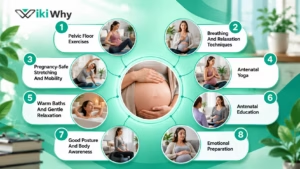
Perineal massage is not the only way to prepare physically and mentally for birth.
Other pregnancy-safe approaches may help with pelvic awareness, strength, relaxation and confidence.
Pelvic Floor Exercises
Pelvic floor exercises strengthen the muscles that support the bladder, bowel and uterus.
Pregnancy places increasing pressure on these muscles, so regular pelvic floor exercises are commonly recommended throughout pregnancy.
However, birth preparation is not only about strengthening the pelvic floor.
Learning how to relax these muscles can also be useful because they need to lengthen and release during vaginal birth.
Breathing And Relaxation Techniques
Slow breathing, relaxation exercises and body awareness can help reduce muscular tension and improve confidence before labour.
These techniques can also be practishttp://musclesed much earlier in pregnancy than perineal massage.
Pregnancy-Safe Stretching And Mobility
Gentle pregnancy-appropriate movement may help maintain comfort, mobility and pelvic awareness.
Exercises should remain comfortable and should be modified when necessary, especially in people with pregnancy complications.
Are Other Types Of Massage Safe During Pregnancy?
General pregnancy massage is different from perineal massage.
Prenatal massage usually involves areas such as the back, shoulders, legs and hips rather than the vaginal or perineal tissues.
Massage during pregnancy can often be performed safely when the technique, pressure and body position are adapted appropriately.
Prenatal Massage
Prenatal massage is designed specifically for pregnancy.
A qualified therapist should understand suitable positioning and avoid techniques that are inappropriate during pregnancy.
Side-lying positions are commonly used later in pregnancy because lying flat for long periods may become uncomfortable.
Back Massage During Pregnancy
Back massage can help some pregnant people manage muscle tension and general discomfort.
Pressure should remain comfortable, and deep or aggressive techniques should be avoided if they cause pain.
Anyone with significant pregnancy complications should discuss massage with their maternity team before booking treatment.
When To Avoid Massage Or Ask For Medical Advice?
Professional advice may be appropriate if you have:
- Vaginal Bleeding
- Severe Swelling
- High Blood Pressure
- Significant Abdominal Pain
- Placental Problems
- Risk Of Premature Labour
- Blood Clotting Problems
- Other Pregnancy Complications
What Other Methods Can Help Prepare The Body For Birth?
Several techniques can complement perineal massage and support overall birth preparation.
Antenatal Classes And Birth Preparation
Antenatal classes can help pregnant people understand labour stages, pain relief choices, breathing techniques, birth positions and what to expect during delivery.
Understanding the process can make labour feel less unfamiliar and help parents make informed decisions.
Perineal Protection And Warm Compresses During Labour
Perineal protection during childbirth may involve controlled delivery of the baby’s head, supportive maternity techniques and warm compresses applied to the perineum during the second stage of labour.
These methods take place during labour rather than during pregnancy and are different from antenatal perineal massage.
What Is The Difference Between Pregnancy Massage And Perineal Massage?
Pregnancy massage and perineal massage have different purposes.
Pregnancy massage is primarily designed to promote relaxation and reduce muscular tension or discomfort.
Perineal massage specifically targets the tissue surrounding the vaginal opening in preparation for vaginal birth.
| Pregnancy Massage | Perineal Massage |
| Can Involve Back, Legs, Hips And Shoulders | Focuses On The Perineum |
| Primarily Used For Comfort And Relaxation | Primarily Used For Birth Preparation |
| May Be Used At Different Stages Of Pregnancy | Usually Introduced Late In Pregnancy |
| Often Performed By A Trained Therapist | Often Performed By The Pregnant Person Or Partner |
They should not be treated as interchangeable techniques.
Before 34 Weeks Vs After 34 Weeks For Perineal Massage
| Before 34 Weeks | From Around 34 To 35 Weeks |
| Not The Usual Starting Period | Commonly Recommended Starting Window |
| Earlier Use Has Been Less Studied | Better Represented In Research |
| No Clear Evidence Of Additional Benefit | Potential Benefits For Perineal Outcomes |
| Individual Advice May Be Important | Usually Suitable When No Contraindications Exist |
The difference is mainly related to evidence and clinical guidance rather than a sudden biological change occurring on the first day of week 34.
Conclusion
Perineal massage is generally recommended during the final weeks of pregnancy rather than earlier because this is the period best represented in maternity guidance and research.
There is not strong evidence proving that massage before 34 weeks automatically causes harm, but there is also limited evidence showing any benefit from starting much earlier.
The 34-week recommendation should therefore be understood as a practical evidence-based starting period rather than a strict biological safety switch.
Other approaches, including pelvic floor exercises, relaxation techniques, prenatal massage and antenatal education, can be used at different stages of pregnancy to support comfort and birth preparation.
Anyone with bleeding, suspected waters breaking, vaginal infection, risk of preterm labour or another pregnancy complication should seek advice from their maternity team before beginning perineal massage.
FAQs
Can I Start Perineal Massage At 32 Weeks?
Most maternity guidance recommends waiting until around 34 to 35 weeks because there is limited evidence that beginning at 32 weeks provides additional benefit.
Can I Start Perineal Massage At 33 Weeks?
Waiting until the recommended late-pregnancy period is generally more consistent with available evidence unless your maternity team advises differently.
Can Perineal Massage Bring On Labour?
There is no strong evidence that properly performed late-pregnancy perineal massage routinely starts labour. Stop and seek advice if you experience painful or regular contractions.
Is Pregnancy Massage Safe Before 34 Weeks?
General prenatal massage is different from perineal massage and may be suitable earlier in pregnancy when performed appropriately and adapted to the pregnancy.
Is Back Massage Safe During Pregnancy?
Back massage is generally considered suitable for many pregnant people when pressure and positioning remain comfortable and pregnancy complications are taken into account.
How Often Should You Do Perineal Massage?
Several short sessions each week are commonly recommended from the appropriate late-pregnancy stage, although exact frequency varies between maternity services.
Should You Ask Your Midwife Before Starting Perineal Massage?
It is particularly important to ask for advice if you have bleeding, vaginal infection, suspected waters breaking, risk of preterm labour or another pregnancy complication.