Feeling ill after eating can mean nausea, bloating, stomach discomfort, dizziness, weakness or simply feeling generally unwell.
Sometimes the reason is straightforward, such as eating too much or consuming a food that does not agree with you.
In other cases, repeated symptoms may be connected to the digestive system, medication, hormones or another health condition.
Occasional mild nausea after a heavy meal is usually not a major concern.
However, feeling sick after most meals, being unable to eat normally or developing symptoms such as severe abdominal pain, persistent vomiting or unexplained weight loss should be investigated.
Understanding when symptoms occur, what you have eaten and whether other symptoms appear at the same time can help identify the likely cause.
Is Feeling Ill After Eating Caused By Your Body Or Certain Foods?
It can be caused by either.
Certain foods can directly trigger symptoms, especially if you have a food intolerance, allergy or digestive condition.
Dairy products, fatty meals, spicy foods, alcohol and certain highly processed foods are common triggers for some people.
However, the food itself is not always the problem. Your body may have difficulty digesting food normally because of conditions affecting the stomach, intestines, gallbladder or digestive nerves.
Stress and anxiety can also affect digestion through the connection between the brain and digestive system.
A useful way to identify the difference is to look for patterns. If symptoms consistently occur after one particular food, an intolerance or sensitivity may be more likely.
If almost every meal causes symptoms regardless of what you eat, an underlying digestive or medical condition may need to be considered.
Avoid removing several food groups from your diet without medical or dietetic advice, particularly if your symptoms happen regularly.
Should You Go To A Pharmacy, GP Or Hospital?
Where you should seek help depends on how severe and frequent your symptoms are.
A pharmacist may be able to advise about mild, occasional symptoms such as indigestion, heartburn or short-term nausea. They can also tell you whether an over-the-counter treatment is appropriate.
Contact your GP if the problem keeps returning, lasts for several days, affects your appetite or makes it difficult to eat normally.
You should also arrange medical assessment if you experience unexplained weight loss, frequent vomiting, persistent abdominal pain or symptoms after almost every meal.
Urgent medical attention may be necessary if you develop severe symptoms such as vomiting blood, black stools, sudden severe abdominal pain, breathing difficulty, severe swelling or collapse.
What Are The Main Reasons You Feel Ill After Eating?
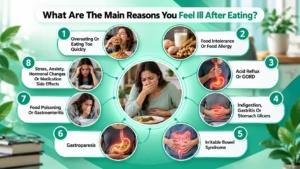
There is no single cause of post-meal nausea. Looking at your symptoms, meal size, trigger foods and timing can help narrow down what may be happening.
1. Overeating Or Eating Too Quickly
One of the simplest explanations is eating more food than your stomach can comfortably manage.
Large meals stretch the stomach and can leave you feeling overly full, bloated or nauseous. Eating very quickly may have a similar effect because your body has less time to recognise that you are becoming full.
Eating rapidly can also make you swallow more air, increasing bloating and belching.
Try eating smaller portions, chewing thoroughly and slowing down during meals. If these changes stop the symptoms, overeating or eating speed may have been contributing.
2. Food Intolerance Or Food Allergy
Food intolerance happens when your digestive system has difficulty processing a particular food or ingredient.
Lactose intolerance is one example and may cause bloating, abdominal discomfort, diarrhoea or nausea after dairy products.
Food allergy is different because it involves an immune system reaction. Symptoms can include nausea, vomiting, itching, hives and swelling.
A serious allergic reaction can cause swelling of the tongue or throat, breathing difficulty, severe dizziness or collapse and requires emergency medical attention.
If you suspect a food intolerance, keeping a food and symptom diary may help identify patterns. Do not unnecessarily eliminate major food groups without appropriate advice.
3. Acid Reflux Or GORD
Gastro-oesophageal reflux disease, commonly called GORD, occurs when stomach contents repeatedly move back towards the oesophagus.
You may experience:
- Heartburn
- A Sour Or Bitter Taste
- Burping
- Upper Abdominal Discomfort
- Nausea After Meals
Large meals and lying down soon after eating can make symptoms worse.
Some people have reflux without obvious heartburn, so nausea or an unpleasant taste after eating may sometimes be the more noticeable symptom.
4. Indigestion, Gastritis Or Stomach Ulcers
Indigestion can cause upper abdominal discomfort, nausea, bloating, belching, and an uncomfortable feeling of fullness after meals.
Gastritis occurs when the stomach lining becomes irritated or inflamed. Stomach ulcers can also cause similar symptoms.
Pain may occur in the upper part of the abdomen and may feel burning or gnawing.
Persistent symptoms should be assessed rather than repeatedly treated with over-the-counter remedies, particularly if there is weight loss, difficulty swallowing, vomiting or signs of gastrointestinal bleeding.
5. Irritable Bowel Syndrome
Irritable bowel syndrome, or IBS, affects the digestive system and commonly causes abdominal cramps, bloating, diarrhoea or constipation.
Eating can trigger symptoms because meals naturally stimulate movement through the intestines.
Some people with IBS also experience nausea.
Different foods affect different people, so keeping a symptom diary can sometimes reveal patterns. Dietary changes should be personalised rather than removing large numbers of foods unnecessarily.
6. Gastroparesis
Gastroparesis means the stomach empties food more slowly than normal.
This can cause:
- Feeling Full Very Quickly
- Nausea After Eating
- Bloating
- Vomiting
- Upper Abdominal Discomfort
Someone with gastroparesis may begin feeling full after eating only a small amount.
Diabetes is one condition associated with gastroparesis, although there are other possible causes.
Regular early fullness or vomiting after eating should be discussed with a GP.
7. Food Poisoning Or Gastroenteritis
Food poisoning and gastroenteritis can cause sudden nausea, vomiting, diarrhoea and abdominal cramps.
Food poisoning may develop after eating contaminated food, although symptoms do not necessarily begin immediately after the meal that caused the illness.
Most mild stomach infections improve with rest and adequate fluids.
Medical advice may be needed if symptoms are severe, you cannot keep fluids down, signs of dehydration develop or symptoms persist.
8. Stress, Anxiety, Hormonal Changes Or Medication Side Effects
Digestion is strongly influenced by the nervous system.
Anxiety and emotional stress can alter gut movement and make people feel nauseous before, during or after meals.
Hormonal changes may also contribute. Pregnancy, menstrual-cycle changes and some thyroid conditions can affect digestion and appetite.
Medicines are another common possibility. Antibiotics, some painkillers, antidepressants and certain medicines used for diabetes or weight management can cause nausea.
If nausea began after starting or changing a medicine, speak to a pharmacist, GP or the healthcare professional who prescribed it. Do not stop prescribed medication without appropriate advice.
Does The Timing Of Feeling Ill After Eating Help Identify The Cause?

Yes. Timing can provide useful clues, although it cannot diagnose the cause by itself.
Feeling sick almost immediately after eating may be associated with eating too quickly, overeating, reflux, anxiety or a food allergy.
Symptoms appearing later may be linked to digestion, food intolerance, stomach emptying, gallbladder problems or other digestive conditions.
Food poisoning can start hours or sometimes considerably longer after the contaminated food was eaten, so the most recent meal is not always responsible.
Keep track of how long after eating your symptoms begin. This information can be particularly helpful if you eventually need medical assessment.
Why Do I Feel Ill Every Time I Eat?
Feeling unwell after virtually every meal is different from occasional nausea after overeating.
Possible explanations include reflux, persistent indigestion, gastritis, IBS, gastroparesis, medication side effects or another digestive problem.
It is also important to consider whether you have started restricting your food intake because you are worried about becoming sick.
If nearly every meal causes symptoms for more than a short period, arrange an appointment with your GP rather than continually experimenting with different diets or medicines yourself.
Why Do I Feel Sick After Eating Only A Small Amount?
Feeling unusually full after just a few bites is known as early satiety.
It may happen temporarily during illness or stress, but persistent early fullness can sometimes be associated with conditions such as gastroparesis or persistent upper digestive problems.
Pay attention to whether it occurs alongside:
- Unexplained Weight Loss
- Persistent Bloating
- Vomiting
- Abdominal Pain
- Loss Of Appetite
Regular early fullness should be medically assessed, particularly if you are losing weight or struggling to eat enough.
What Other Symptoms Can Help Identify The Cause?
The symptoms that occur alongside nausea can provide useful clues.
Heartburn and a sour taste may suggest reflux, while diarrhoea and vomiting can occur with gastroenteritis or food poisoning.
Bloating and diarrhoea after specific foods may point towards an intolerance.
Feeling full unusually quickly can occur with delayed stomach emptying.
Right-sided upper abdominal pain after fatty food may require assessment for gallbladder problems.
Dizziness, sweating, trembling or weakness may have several explanations and should not automatically be assumed to be caused by digestion.
Symptoms such as breathing difficulty, facial or throat swelling, vomiting blood, black stools or severe abdominal pain require more urgent assessment.
How Will A GP Find Out What Is Causing It?
A GP will usually begin by asking questions about the pattern of your symptoms.
You may be asked:
- What Foods You Normally Eat
- How Soon Symptoms Begin After Eating
- How Long The Symptoms Last
- Whether You Have Pain, Bloating, Diarrhoea Or Constipation
- Whether Your Weight Has Changed
- Which Medicines You Take
- Whether Particular Foods Trigger The Problem
Depending on your symptoms, further investigation may include blood tests or other tests for digestive conditions.
Some people may need specialist assessment, imaging, an endoscopy or tests that examine how quickly the stomach empties.
Not everyone requires these investigations. Testing depends on your symptoms, medical history and the doctor’s findings.
What Can You Do At Home To Feel Better?
Mild occasional nausea can often be managed with simple measures.
Try eating smaller portions rather than very large meals and eat slowly.
Avoid immediately lying flat after eating, particularly if reflux is a problem.
Sip fluids regularly and avoid consuming large amounts at once if this makes you feel excessively full.
If you notice that a particular food repeatedly triggers symptoms, write it down alongside the timing and symptoms rather than immediately removing numerous foods from your diet.
Ginger may help nausea for some people, although it will not treat an underlying digestive disorder.
Persistent symptoms should not be managed indefinitely with home remedies.
Should You Take Medicine For Nausea Without Seeing A Doctor?
It depends on the cause and severity of your symptoms.
For mild indigestion or heartburn, a pharmacist may be able to recommend an appropriate over-the-counter treatment.
However, nausea can have many different causes, and treating the symptom without understanding why it keeps happening can delay diagnosis of an underlying condition.
Speak to a pharmacist or healthcare professional before combining medicines or taking treatment regularly.
You should contact your GP if nausea repeatedly returns, continues despite treatment or is accompanied by other concerning symptoms.
Never stop prescribed medicines simply because you suspect they are causing nausea. Discuss possible side effects with the prescriber first.
How Can You Prevent Feeling Ill After Eating?
Prevention depends on what is causing your symptoms.
For occasional digestive discomfort, try:
- Eat Smaller Portions
- Eat More Slowly
- Chew Food Thoroughly
- Avoid Known Trigger Foods
- Remain Upright After Meals
- Drink Enough Fluids Throughout The Day
If symptoms appear after a particular type of food, record what you ate, the portion size and how quickly the symptoms started.
Avoid unnecessarily restrictive diets. Removing foods such as dairy or gluten without knowing whether they are responsible can make your diet harder to manage and may interfere with medical investigations.
If symptoms continue despite basic changes, seek medical advice.
When Should You Contact A GP Or NHS 111?
Contact your GP if nausea keeps returning or does not improve after several days.
Medical advice is also appropriate if you:
- Feel Sick After Most Meals
- Regularly Vomit After Eating
- Become Full After Very Small Amounts
- Have Persistent Stomach Pain
- Experience Ongoing Diarrhoea Or Constipation
- Lose Weight Without Trying
- Have Difficulty Swallowing
- Cannot Identify Why Symptoms Keep Happening
For symptoms that feel urgent but are not clearly life-threatening, NHS 111 can help determine the appropriate level of care.
When Should You Go To Hospital Immediately?
Some symptoms should not be managed at home.
Seek urgent or emergency medical help if nausea or vomiting occurs with:
- Vomiting Blood
- Black Or Tarry Stools
- Sudden Severe Abdominal Pain
- Severe Breathing Difficulty
- Significant Swelling Of The Mouth, Tongue Or Throat
- Collapse Or Loss Of Consciousness
- Severe Chest Pain Or Pressure
- Inability To Keep Fluids Down With Signs Of Serious Dehydration
These symptoms may indicate a condition requiring immediate assessment.
FAQs
Why Do I Feel Sick After Eating But Do Not Vomit?
Nausea does not always lead to vomiting. Reflux, indigestion, anxiety, food intolerance, medications and digestive disorders can all cause nausea without vomiting.
Why Do Certain Foods Suddenly Make Me Feel Ill?
Changes in digestion, food intolerance, medication, illness or an underlying digestive problem can make previously tolerated foods uncomfortable. Repeated reactions should be discussed with a healthcare professional.
Why Do I Feel Dizzy Or Shaky After Eating?
Dizziness or shakiness after eating can have several causes, including changes in blood sugar, blood pressure or anxiety. Repeated episodes should be medically assessed rather than self-diagnosed.
Can Acid Reflux Cause Nausea Without Heartburn?
Yes. Some people experience nausea, regurgitation, burping or a sour taste without noticeable burning pain in the chest.
Is Feeling Ill After Every Meal A Serious Sign?
Not necessarily, but it should not be ignored. Persistent symptoms after every meal can indicate an underlying digestive or medical issue that requires assessment.
How Long Should Nausea After Eating Last?
There is no single normal duration because it depends on the cause. Mild nausea from overeating may settle relatively quickly, while repeated or prolonged nausea should be assessed.
Can Medicines Cause Nausea After Eating?
Yes. Several medicines can cause nausea or alter digestion. If symptoms began after starting or changing medication, discuss them with a pharmacist, GP or the prescribing healthcare professional.