
What is it about fire that draws goats in? Why do they sometimes gather around a bonfire or seem unusually interested in smouldering remains? Could it be simply the warmth or is there more going on?
Goats, curious and intelligent creatures, have been observed showing particular interest in fire. While this behaviour may appear puzzling or even risky, it has practical explanations rooted in their biology and instincts. This article explores why goats appear to “like” fire, what they gain from it, and how this knowledge can help farmers and animal carers better manage their livestock.
Why Are Goats Drawn to Fire?
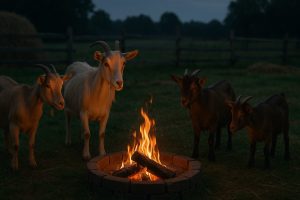
Goats are often associated with mischief, curiosity, and unpredictability. However, their fascination with fire is not merely playful; it stems from deeper environmental and instinctive behaviours.
One of the primary reasons goats gravitate toward fire is their natural desire for warmth, particularly in colder weather.
Goats, despite their thick fur, are susceptible to low temperatures and will actively seek out warmer areas for comfort. In a pasture or farm environment, a burning fire or residual heat from a campfire offers an immediate source of warmth.
But temperature alone does not explain their behaviour. Goats are among the most inquisitive of herd animals.
They regularly explore unfamiliar elements in their surroundings, and fire offering light, sound, and smell presents a multi-sensory experience that piques their interest. The crackling sound, flickering flame, and rising smoke all trigger exploratory responses.
This curiosity, however, is not without risk. While their interest in fire is natural, it must be monitored to avoid potential injury or exposure to smoke and embers.
Can Fire Help Goats Relieve Parasites?
Interestingly, goats may approach fire not only for warmth or curiosity but also as a natural form of parasite relief. External parasites such as lice, mites, and ticks can cause significant discomfort to goats, leading them to seek instinctive solutions.
When goats stand near or roll around in areas where a fire has burned such as cooled embers or ash, they may be attempting to relieve the irritation caused by these pests. The residual heat can help kill or dislodge parasites on the surface of their fur and skin.
This behaviour can be observed more frequently in goats that are not regularly treated for parasites, especially in regions where infestations are common.
While it is not a replacement for veterinary parasite treatment, the goats’ instinctive behaviour shows a level of self-awareness and an ability to interact with their environment for relief. In some cases, goats may even favour resting near warm surfaces, not just for comfort, but as a way to manage skin discomfort.
Do Goats Eat Ash and Charcoal from Fires?
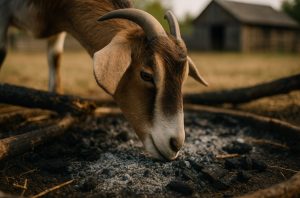
Yes, goats have been observed eating ash and charcoal left behind after a fire. At first glance, this may seem dangerous or unusual, but it can be a purposeful and beneficial act.
Charcoal is known for its ability to bind toxins in the digestive tract. Ingesting small amounts of it can help animals, including goats, cleanse their systems. In fact, this practice of animals eating substances for medicinal purposes is known as zoopharmacognosy self-medication in the animal kingdom.
Ash, on the other hand, can be a source of trace minerals such as calcium, magnesium, and potassium, which goats may naturally seek if their diet is lacking. While not every goat will do this, those with mineral deficiencies or digestive discomfort may instinctively nibble on small amounts of ash or charcoal.
That said, this behaviour should not be relied upon as a substitute for balanced nutrition. Farmers should ensure that their goats receive proper mineral supplements, clean water, and access to veterinary care when needed.
Is It Safe for Goats to Be Near Fire?
Despite some benefits, fire poses real risks to goats if not managed properly. While the heat and post-fire environment may be appealing to goats, open flames and smouldering wood can result in burns, respiratory issues, and accidental fires.
The most immediate danger is burn injury. Goats, especially those unfamiliar with fire, may get too close or try to investigate a burning log or flame. Since they lack an innate understanding of the danger, their natural curiosity can quickly lead to accidents.
Smoke inhalation is another concern. In confined or poorly ventilated areas, even a small fire can produce smoke that irritates the goats’ lungs and eyes, potentially leading to respiratory distress. In addition, dry bedding, hay, and wooden structures often found on farms can become fire hazards if flames are not properly contained.
Farmers should always use controlled fire safely and keep goats at a distance. If warmth is needed, safer alternatives such as radiant heaters or insulated shelters should be prioritised over open flames.
Are Goats the Only Animals That Interact with Fire?
Goats may be more curious than other farm animals, but they are not alone in responding to fire or heat sources. Other livestock also exhibit behaviour changes in the presence of warmth.
| Animal | Interaction with Fire or Heat | Notes |
| Goats | Seek warmth, eat ash or charcoal, may roll in ash | Highly curious and adaptive |
| Sheep | Often huddle near warmth, cautious of fire | Less exploratory than goats |
| Cows | Use radiant heaters, tend to avoid flames | Calmer but less curious |
| Chickens | Avoid fire entirely, prefer enclosed heat sources | Sensitive to smoke and fumes |
| Pigs | Intelligent but cautious, may use warmth | Less likely to interact with flames |
What sets goats apart is their active interaction with fire-related elements. From warmth-seeking to charcoal consumption, they engage with their surroundings in a more nuanced way than many other livestock species.
Can Fire Be Considered a Natural Remedy for Goats?
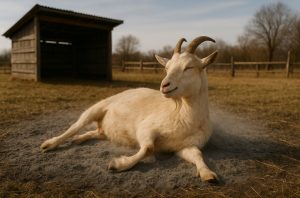
In limited contexts, yes. Fire or more accurately, the by-products of fire, can offer minor health benefits to goats. Ashes, residual heat, and charcoal may serve functions similar to natural remedies.
For example, in dry seasons when parasites are more active, goats may seek warm, scorched ground where mites and ticks are less likely to survive. Ingestion of charcoal has also been observed following digestive upset, supporting its use as a mild detoxifier.
However, it’s important not to overstate these behaviours as medical treatment. While fire may provide incidental relief or nutritional supplementation, it cannot replace proper veterinary care, deworming, and balanced feeding.
Recognising these behaviours should help farmers understand what their goats are lacking—be it warmth, nutrients, or comfort not replace essential animal care protocols.
Why Do Goats Roll in Ash or Rest Near Burnt Ground?
Goats may roll in ash or settle near scorched earth after a fire as a form of self-maintenance. This behaviour can serve several purposes:
- Parasite control: Ash can irritate or dislodge mites, fleas, or ticks.
- Skin relief: The texture and temperature of ash may soothe itchy or irritated skin.
- Environmental preference: Burnt ground may be drier and warmer, reducing the risk of chills or bacterial exposure.
This behaviour is similar to dust bathing, which is common in goats and other animals. In dust bathing, animals roll in dry soil or sand to clean their skin and remove external pests. Ash serves a similar purpose with added warmth.
The act of rolling or lying in ash can be viewed as a learned or instinctive behaviour to promote health and comfort.
Should Farmers Be Concerned If Goats Engage with Fire?
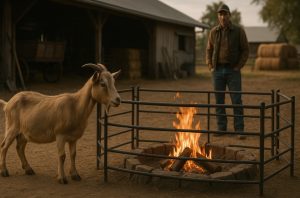
Concern is warranted if fire is unsupervised or used regularly near livestock. Even though goats display adaptive behaviour, fire can cause more harm than good without proper oversight.
Farmers should focus on understanding why goats engage with fire. If goats are eating ash or charcoal, it may indicate mineral deficiency. If they linger around flames during cold weather, they may lack proper shelter. If they are rolling in scorched areas, they may have undiagnosed skin irritations or parasites.
By addressing the root causes behind these behaviours, farmers can create safer and more responsive environments.
What Can Be Done to Keep Goats Safe While Addressing Their Needs?
While fire can incidentally benefit goats, there are safer and more effective ways to meet their needs:
- Warmth: Use insulated shelters, windbreaks, and safe heating options during winter months.
- Minerals: Provide mineral licks and balanced feed to reduce ash consumption.
- Parasite Control: Maintain a schedule for deworming and use natural pest-repelling techniques when appropriate.
- Environment: Keep fire pits fenced or inaccessible to goats and never leave flames unattended.
These methods ensure that goats receive what they instinctively seek comfort, health, and nourishment without risking injury or fire damage.
Frequently Asked Questions
Do goats stand near fire because they enjoy it?
Not quite. Goats stand near fire mostly for warmth, relief from parasites, or curiosity. They don’t “enjoy” fire in a human sense but may find it beneficial.
Is it safe to feed goats charcoal?
Charcoal should not be fed without veterinary advice. While goats may self-select small amounts after a fire, excessive consumption can be harmful.
Can goats get burned if they get too close to a fire?
Yes, goats can be burned if they approach an open flame or hot embers. Their curiosity makes supervision important.
Why do goats eat ash?
Ash may contain trace minerals or help neutralise digestive upset. It’s an instinctive behaviour but shouldn’t replace proper nutrition.
Are there any benefits to rolling in ash?
Rolling in ash can help goats dislodge parasites and soothe irritated skin, similar to how they use dust baths.
Should farmers allow goats near fire?
No. While goats may benefit from some by-products of fire, the risks of open flame exposure outweigh the benefits. Safer alternatives are recommended.
How can I tell if my goat has parasites?
Signs include excessive scratching, bald patches, skin irritation, or frequent rubbing against surfaces. Veterinary assessment is best.
READ NEXT: