
If your dog refuses their usual food but immediately becomes interested when you offer a treat, it can be confusing.
In some cases, the explanation is simple. Your dog may prefer the stronger smell and flavour of treats or may have learned that refusing dinner results in something tastier.
However, eating treats does not always mean that your dog is healthy. Dental pain, digestive discomfort, stress, medication, illness or unsuitable food can also make a dog avoid normal meals while still accepting small amounts of highly appealing food.
The most important step is to look at the whole situation. Consider your dog’s usual appetite, energy levels, weight, drinking habits, stools, behaviour and any recent changes to their food or routine.
Why Will My Dog Eat Treats but Not His Normal Food?
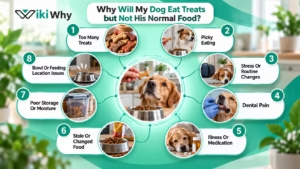
Treats are deliberately designed to be appealing. They may have a stronger smell, richer taste or different texture from a dog’s everyday food.
A dog that has discovered treats are available may therefore lose interest in ordinary meals, especially if refusing food regularly leads to another option.
Too Many Treats or Picky Eating
Too many snacks between meals can reduce your dog’s appetite.
This can happen with more than obvious dog biscuits. Daily extras may include:
- Training Treats
- Dental Chews
- Table Scraps
- Food Used Inside Puzzle Toys
- Long-Lasting Chews
- Small Snacks Given By Different Family Members
These calories can quickly add up, particularly for small dogs.
Some dogs also become selective eaters because they learn that rejecting their meal may result in chicken, treats, wet food or another preferred option.
This does not mean you should force your dog to eat. Instead, review how much extra food they receive and whether you are unintentionally rewarding meal refusal.
Stress, Dental Pain or Health Problems
Stress can temporarily affect appetite. Moving home, introducing another pet, changes in household routine, loud noises or being left alone can all affect some dogs.
Dental discomfort is another important possibility.
A dog with painful teeth or gums may still accept small, soft or particularly tasty treats but struggle with harder food.
Watch for:
- Dropping Food While Eating
- Chewing On One Side
- Excessive Drooling
- Bad Breath
- Pawing At The Mouth
- Swollen Or Bleeding Gums
- Approaching Food Then Walking Away
Digestive problems, nausea, pain and other illnesses can also reduce normal appetite.
Medication can occasionally affect appetite too. If your dog’s eating behaviour changed soon after starting treatment, contact your vet before changing or stopping any prescribed medication.
Stale, Unappealing or Unsuitable Dog Food
Sometimes the problem is the food itself.
Check whether the food:
- Has Passed Its Recommended Storage Period
- Smells Different Than Usual
- Has Been Exposed To Moisture
- Has Been Stored In Excessive Heat
- Has Recently Changed Recipe Or Ingredients
- Has Been Left Open For Too Long
Dogs have a much stronger sense of smell than humans, so they may notice changes in food before you do.
Also consider the feeding bowl and location.
Some dogs may dislike a noisy metal bowl, a bowl that slides across the floor or a feeding location where they feel disturbed by people or other animals.
Is My Dog Refusing Food Because I Chose the Wrong Dog Food?
Choosing unsuitable food can contribute to poor appetite.
A dog’s nutritional requirements can change depending on age, size, activity, body condition and health.
A growing puppy will not have exactly the same nutritional needs as an adult dog, while an older dog may have different calorie requirements and may find certain textures easier to eat.
Choosing Food for Your Dog’s Age, Size and Health Needs
Start by choosing food appropriate for your dog’s life stage.
Puppies generally require food designed to support growth, while adult dogs need nutrition suitable for maintaining healthy body weight and activity.
Senior dogs may benefit from diets suited to their changing energy requirements, although age alone does not mean every dog needs a specialist senior diet.
Breed size can also matter. Large-breed puppies, for example, can have different nutritional requirements from very small breeds during growth.
Dogs with health conditions may require specific veterinary diets. These should be chosen with professional advice rather than simply switching foods because your dog has become picky.
Signs the Food May Not Suit Your Dog
Possible signs that a particular diet may need reviewing include:
- Regular Digestive Upset
- Persistent Loose Stools
- Excessive Gas
- Poor Coat Condition
- Unexpected Weight Gain Or Loss
- Consistent Refusal Of The Same Food
- Difficulty Chewing The Food
- Reduced Interest After A Recipe Change
However, these symptoms do not automatically prove the food is responsible. Health problems can cause similar changes, so persistent symptoms should be discussed with a vet.
How Do I Choose Healthy Food for My Dog?
Healthy feeding is about more than choosing the most expensive food.
The priority is providing a nutritionally complete diet that is suitable for your dog’s life stage and individual requirements.
Complete and Balanced Dog Food
Your dog’s main food should provide the nutrients needed for normal health.
A complete diet should contain appropriate amounts of nutrients such as:
- Protein
- Fat
- Vitamins
- Minerals
- Essential Fatty Acids
- Suitable Energy Levels
Avoid choosing food based only on attractive packaging, trendy ingredients or claims that one particular ingredient automatically makes a food healthier.
Your dog’s response to the food, body condition and overall health are more important than marketing language.
Wet Food vs Dry Food
Both wet and dry dog food can form part of a healthy diet when they are nutritionally complete and appropriate for the dog.
Dry food is convenient, easy to portion and simple to store.
Wet food often has a stronger aroma and softer texture, which some dogs find more appealing.
Neither is automatically superior for every dog.
Some owners combine wet and dry food. If you do this, remember that both contribute calories to the dog’s daily intake.
A dog refusing dry food but eagerly eating soft food may simply prefer the texture. However, a sudden change can also indicate dental pain or difficulty chewing.
How Much Food Should I Give My Dog?
Feeding amounts vary considerably.
Factors that influence how much food a dog needs include:
- Body Weight
- Age
- Breed Size
- Activity Level
- Body Condition
- Neutering Status
- Health
- Calories In The Food
- Number Of Treats Given
The feeding guide on the food packaging can provide a starting point, but it should not always be treated as an exact requirement.
Monitor your dog’s weight and body condition and adjust portions appropriately with veterinary guidance when needed.
Remember that treats also contain calories.
As a general approach, treats should make up only a relatively small part of your dog’s total daily calorie intake, while most nutrition should come from complete dog food.
What Should I Do If My Dog Refuses Food but Eats Treats?
Start by checking whether your dog otherwise seems normal.
Look at energy levels, water intake, bowel movements, vomiting, behaviour and whether they appear uncomfortable.
If your dog seems well, you can then review feeding habits and the food itself.
Reduce Treats and Keep Regular Mealtimes
Avoid allowing snacks to replace proper meals.
Offer meals at predictable times and reduce unnecessary treats between meals.
Make sure everyone in the household follows the same feeding routine. A dog may appear to receive very few treats from one person while actually receiving snacks from several different people throughout the day.
Regular exercise can also support a normal appetite in healthy dogs.
Change Food Gradually If Needed
If your dog consistently dislikes their current food and medical problems have been ruled out, changing diet may help.
Avoid switching suddenly where possible.
Gradually introducing the new food allows your dog’s digestive system time to adjust.
A simple transition may involve increasing the proportion of new food over several days while reducing the old food.
Some dogs may need a slower transition, particularly if they have sensitive digestion.
Make Meals More Appealing Safely
You can sometimes increase interest in food without creating an unhealthy feeding pattern.
Options may include:
- Adding A Small Amount Of Warm Water
- Slightly Warming Appropriate Wet Food
- Feeding In A Quiet Area
- Using A Clean Bowl
- Trying A Different Bowl Shape
- Using A Puzzle Feeder For Dogs That Enjoy Enrichment
Be cautious about repeatedly adding increasingly tasty extras every time your dog refuses food.
Some dogs quickly learn that waiting leads to something better.
Also avoid adding random human foods without checking whether they are safe for dogs.
When Should I Contact a Vet?
A dog refusing regular food should not automatically be dismissed as being fussy.
Contact your vet if the change is sudden, unexplained or persistent, particularly if your dog normally has a strong appetite.
Veterinary advice is especially important for puppies, senior dogs and dogs with existing health conditions.
Warning Signs That Need Veterinary Attention
Seek veterinary advice if food refusal occurs alongside symptoms such as:
- Vomiting
- Diarrhoea
- Significant Lethargy
- Weakness
- Weight Loss
- Abdominal Pain
- Excessive Drooling
- Difficulty Chewing
- Difficulty Swallowing
- Sudden Behaviour Changes
- Signs Of Dental Pain
- Abnormal Drinking
- Refusal To Drink
- Repeated Attempts To Vomit
- A Swollen Or Painful Abdomen
- Suspected Poisoning
- Suspected Foreign Object Ingestion
A dog that approaches food but appears unable to eat may have a different problem from a dog that simply has no interest in food.
Dental disease, mouth injuries, swallowing difficulties and pain should therefore be considered when a dog still appears hungry.
How Can I Prevent My Dog From Becoming a Picky Eater?

Healthy feeding habits are easier to maintain when they remain consistent.
Try to:
- Feed Meals At Regular Times
- Measure Portions Rather Than Guessing
- Limit Unnecessary Treats
- Count Training Rewards As Part Of Daily Food Intake
- Avoid Regular Table Scraps
- Store Dog Food Correctly
- Keep Food And Water Bowls Clean
- Provide Fresh Drinking Water
- Introduce Diet Changes Gradually
- Monitor Your Dog’s Weight And Body Condition
- Maintain Regular Dental Checks
- Arrange Veterinary Check-Ups When Appropriate
Avoid changing food every time your dog hesitates at a meal.
Constantly providing new flavours can sometimes teach a dog that refusing one food leads to a more exciting alternative.
At the same time, do not assume persistent refusal is behavioural. A sudden change in appetite always deserves attention.
Conclusion
A dog that eats treats but refuses normal food may simply prefer the stronger flavour of snacks, but picky eating is only one possible explanation.
Too many treats, unsuitable portions, stale food, an uncomfortable feeding environment, stress, dental pain, digestive problems, medication and illness can all affect normal eating.
Start by reviewing your dog’s food, portion size, treat intake and feeding routine. Choose complete food appropriate for your dog’s age, size and individual requirements, and introduce dietary changes gradually.
Most importantly, pay attention to changes in behaviour and health.
If your dog’s appetite changes suddenly, continues to decline or occurs alongside other symptoms, veterinary assessment can help determine whether the problem is behavioural, dietary or medical.
Frequently Asked Questions
Why Is My Dog Not Eating but Acting Normal?
Some dogs occasionally skip a meal because they are not hungry, have received too many treats or dislike their food. Persistent or sudden appetite changes should still be monitored and discussed with a vet if they continue.
Why Won’t My Dog Eat Kibble but Will Eat Treats?
Your dog may prefer the smell or texture of treats, but dental discomfort can also make hard kibble difficult to chew. Check the food’s freshness and watch how your dog chews.
Should I Stop Giving Treats If My Dog Refuses His Food?
Reducing unnecessary treats can help restore normal hunger. Avoid replacing every refused meal with treats, but do not use prolonged food restriction when your dog may be unwell.
How Do I Know If My Dog’s Food Is Healthy?
Choose a complete food suitable for your dog’s life stage and nutritional needs. Monitor body condition, weight, digestion, coat quality and general health rather than judging food only by individual ingredients.
What Food Is Best for a Picky Dog?
There is no single best food for every picky dog. Choose a complete diet appropriate for your dog’s age and health, then consider preferred texture, smell and kibble size once medical causes of appetite changes have been ruled out.





One Comment